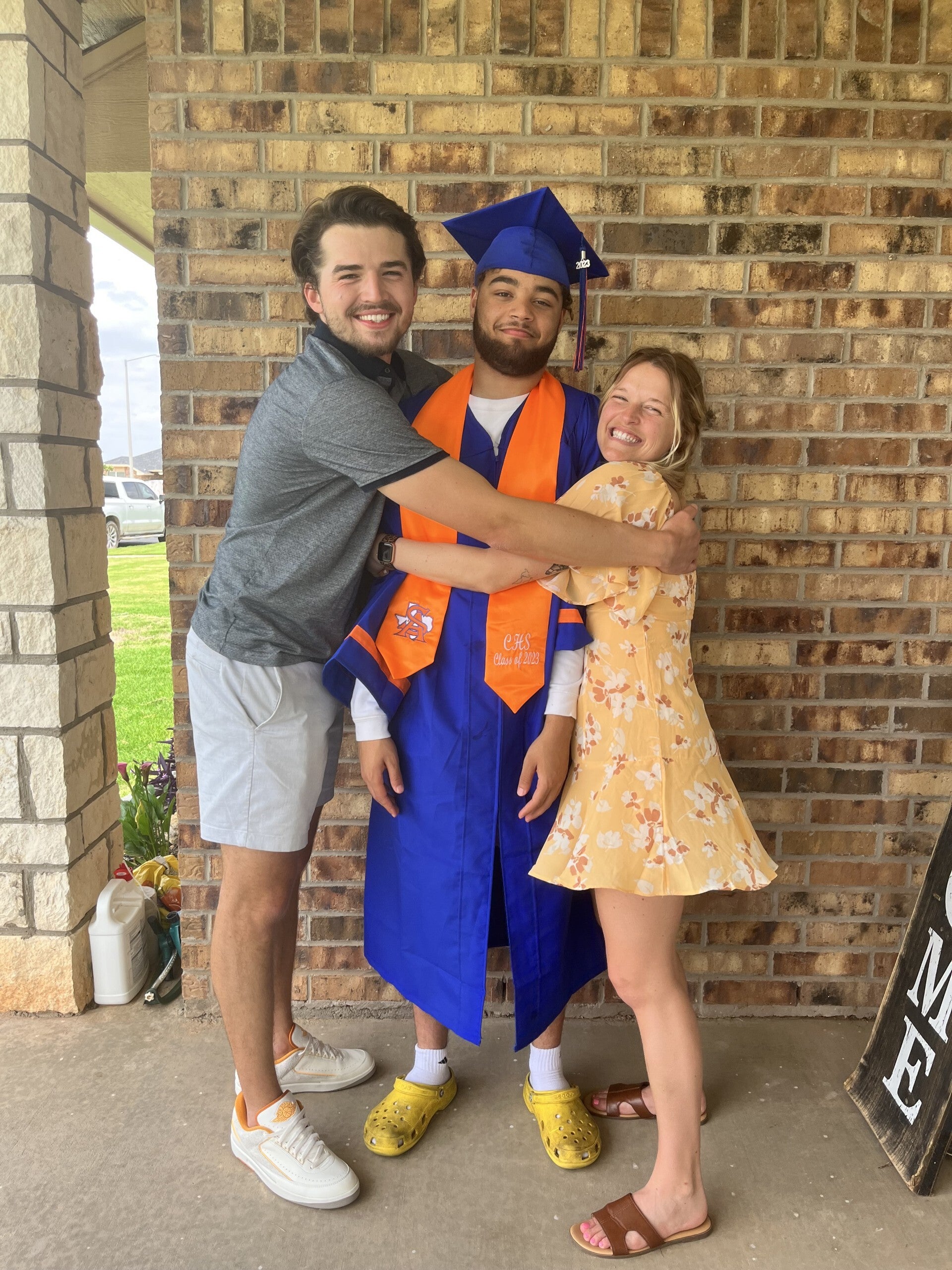
About Me
My name is Evan Arnold, and I am a transfer student at Iowa State University majoring in Electrical Engineering, with an expected graduation in Spring 2028.
I became interested in electrical engineering through my early interest in robotics during high school. At the time, I wasn’t entirely sure what career path I wanted to pursue, but that changed after taking electronics courses and a Physics II class at my previous institution. Learning how circuits and electronic systems work sparked my curiosity and motivated me to explore the field further. As I continued researching electrical engineering, my interest continued to grow.
I am currently building a strong foundation in circuit analysis through my coursework, where I am learning the fundamentals of designing and understanding electrical circuits. These skills are preparing me for more advanced topics in my later classes.
After taking a professional development course, I have become particularly interested in power systems. I am drawn to the idea of working on power grids and energy systems helping to build, maintain, and improve the infrastructure that delivers electricity to communities. I believe this is a meaningful and impactful area where I can contribute to solving real-world challenges.
latest Project
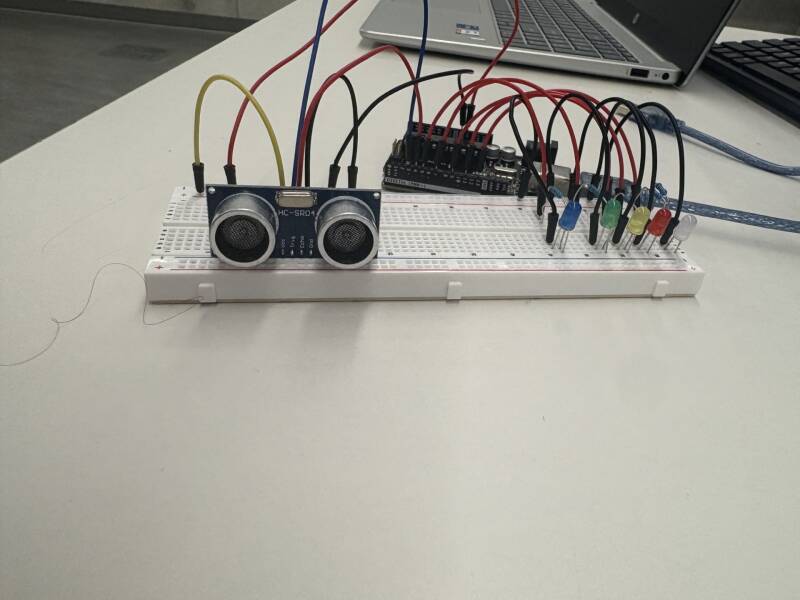
In my first semester here at Iowa state i was able to in class work with an Ultra sonic sensor. My objective with this project was to understand how the component works as well as get a better understanding of how to code with Arduino. With the busy schedule of my current semester, I am looking forward to the summertime to come up and build new projects.

About the project
Why did I choose this project
I choose this project because I was really interested in the component I had when I first saw the component in my lab kit, I was instantly interested in it because of how it looked. After learning more about it and what the sensor dose I was instantly hooked I think the idea and the use case for it.
During the project
With this project, I learned the importance of troubleshooting and problem-solving. When I ran into my first issue, I was stuck for a long time and asked multiple questions to figure out what might be wrong. I decided to test the sensor by using a simple code that should return distance readings, but I got no output. After checking all the connections and ruling out other possibilities in the circuit, I examined the components and realized the sensor was broken, which was the root cause of the problem. This experience taught me how to troubleshoot issues on my own, a valuable skill I will use in the future.
What I gained from this
I absolutely loved this project. Even though it was quick and simple, I learned a lot from creating functions and writing conditional statements to defining my own functions and declaring constants in my code.
The coding process itself was fun, but another major aspect was building the circuit. I learned how to physically assemble it and understand how my code connects to real-world inputs. Figuring out how the circuit interacts with its environment helped me achieve the desired output.
Troubleshooting was also a huge part of this project. I explored different ideas while working through challenges and used online resources to find solutions. It was interesting to see how others encountered and solved similar problems, which helped me fix issues and improve my project.
What's Next/ real world applications
I can upgrade my project by mounting the distance sensor on a servo motor, so it sweeps side to side like a radar and collects readings at different angles. Add LEDs that light up in stages to show how close an object is, creating a clear visual distance gauge. Include a speaker or buzzer that beeps faster as objects get closer and switches to a steady tone when they are too nearby. This combination turns your system into an interactive scanner that provides both visual and audio feedback for distance detection.
Real-world applications of this project can be found everywhere, as the sensor measures the distance between objects. A strong example is a car’s parking sensor system, which detects how close your vehicle is to obstacles and helps prevent collisions. It gauges whether you are too close or still at a safe distance by providing feedback to the driver.
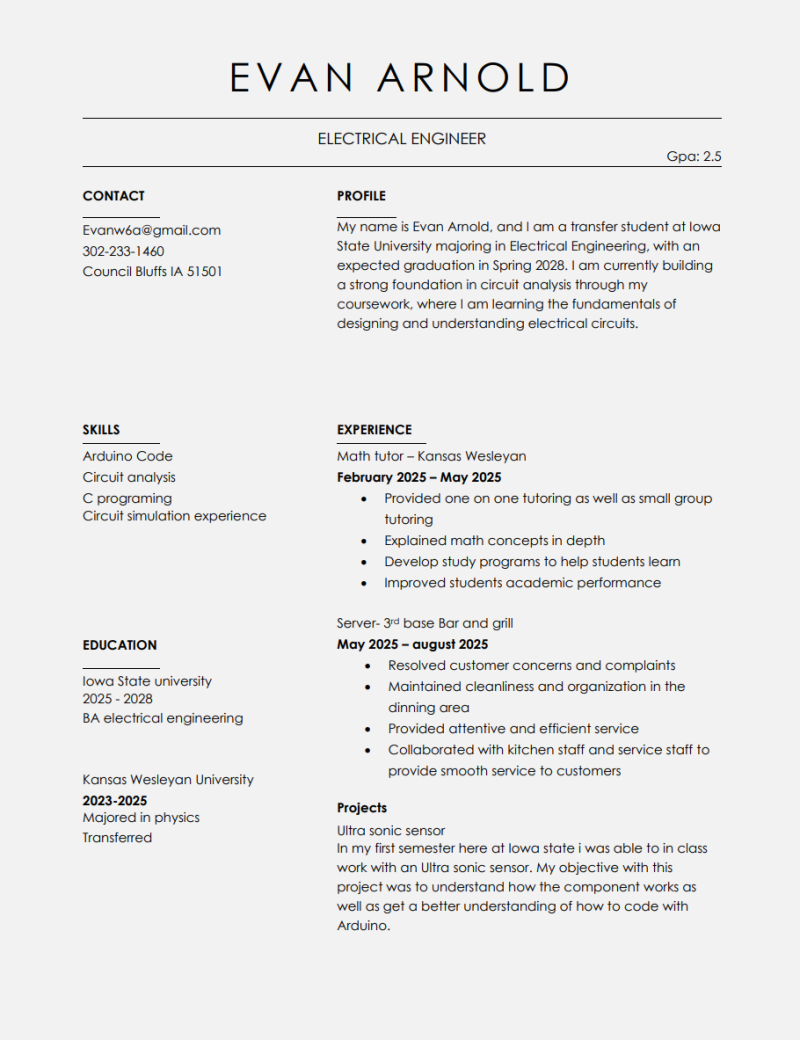
Resume

Create Your Own Website With Webador